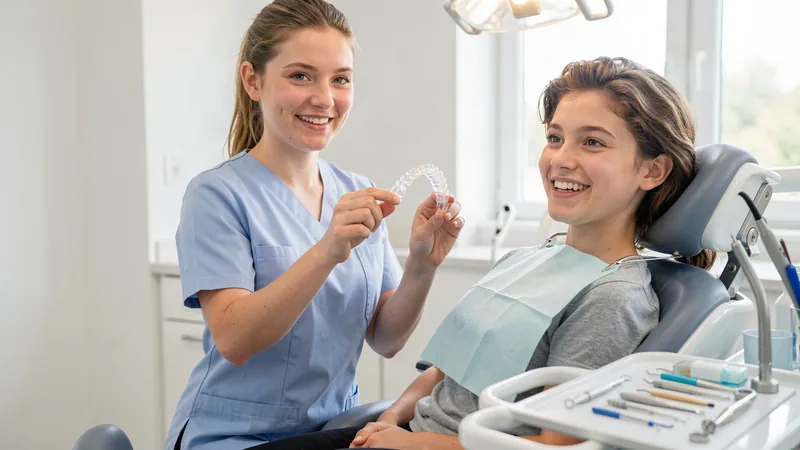
An impacted tooth has formed but cannot come through into the mouth. It is blocked by another tooth, by bone, by the gum, or by crowding that left it no room, and it can sit sideways in the jaw or high in the palate above the front teeth. After the wisdom teeth, the canine is the tooth orthodontists watch most closely, because it forms high up and travels a long way to its place. This page explains what an impacted tooth is, why it matters, how it is found and assessed, how surgical exposure and orthodontics work as one plan, when extraction is the better answer, and where the cost lands. We are a free independent matching service, not a practice: licensed Arlington orthodontists assess, quote and treat.
What an impacted tooth is
An impacted tooth has developed normally but has no path into the mouth. The blockage can be another tooth in the way, dense bone, tough gum tissue, or simple crowding that left no space for it to arrive.
Position varies a great deal. Some impacted teeth sit almost upright behind their neighbours. Others lie sideways, and a canine can sit high in the palate, well away from the arch it should have joined. The position is what decides whether the tooth can be brought into line or whether removing it is the safer plan.
Because a blocked tooth is under the gum, it is usually found by imaging. Many impacted canines are spotted on a routine X-ray long before anyone can see a problem in the mouth, which is one reason a tooth that is late to arrive tends to be imaged rather than watched.
Why an impacted tooth matters
- Damage to the neighbours. A tooth pressing against the root of an incisor can wear that root away over time, and root damage does not grow back.
- Space and alignment. A tooth missing from the arch leaves a gap, and the teeth on either side can tilt into it.
- Bite changes. Where a canine never joins the arch, the bite on that side can settle differently from the other.
- The tissue around the crown. A tooth that stays buried keeps the tissue that surrounds its crown, and in some cases this becomes something the dentist wants to address.
- The crowding that caused it. Whatever left the tooth without room usually needs treating as well, so the plan is rarely about one tooth alone.
The quiet risk is the reason imaging matters. Damage to a neighbouring root happens under the gum and is found late, so a tooth that is clearly late to arrive is usually imaged rather than left to be seen.
How it is found and assessed
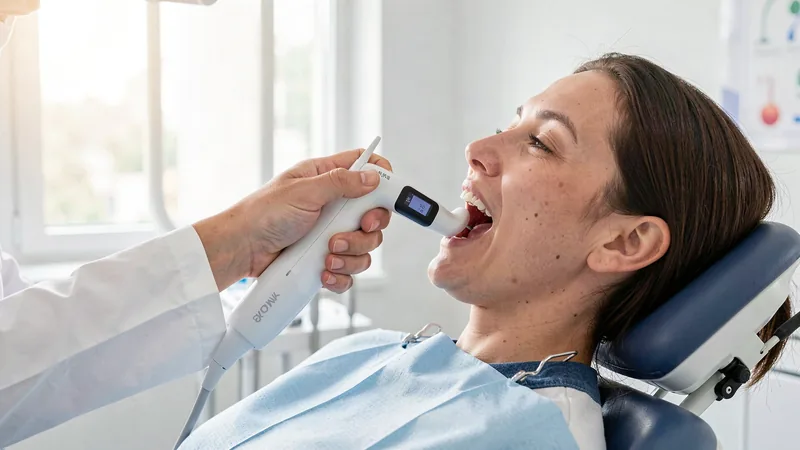
Most impacted teeth are found on an X-ray rather than by looking into the mouth. A panoramic image shows the whole arch and where each tooth sits, and a smaller focused scan may be used when a buried tooth has to be mapped precisely against the roots beside it.
The assessment then answers three questions. Where exactly is the tooth, and which way is it pointing? Is the root of the neighbouring tooth still sound? And is there enough space for the tooth to be brought into the arch if it can be saved?
Records also include photographs and a scan or impression, because bringing an impacted tooth into line is an orthodontic job as well as a surgical one. The orthodontist needs the current position of every tooth to plan where the blocked one should end up.
Treatment options
There are usually three routes, and the position of the tooth decides which is realistic.
- Surgical exposure plus orthodontics. The usual answer for a salvageable impacted canine. The gum and bone over the tooth are opened, an attachment is placed on it, and the orthodontist pulls the tooth gradually into its place in the arch. It is a joint procedure between an oral surgeon and an orthodontist.
- Extraction. Where the tooth is badly positioned, or where the root of a neighbouring tooth is already at risk, removing it can be the safer plan. The orthodontist then closes or manages the space it leaves behind.
- Observation. A tooth that is stable, causing no damage and not needed for the bite may be monitored rather than treated, particularly in an older patient where the risks of intervention are higher.
Whichever route applies, creating space is often the first step. A crowded arch may need to be opened up before a blocked tooth has anywhere to go, and that work is usually done with fixed braces.
Why timing matters
An impacted canine is usually dealt with during the teenage years, and the reason is the surrounding teeth rather than the buried one. While the neighbouring teeth can still be moved easily and the jaw is still growing, bringing the tooth into the arch is more predictable. There is also more room to work with in a growing arch than in a finished one.
Left alone, the risk is quiet rather than dramatic. A buried tooth can wear away the root of an incisor next to it, and because that happens under the gum, it tends to be found late. That is the practical argument for imaging a tooth that is well behind its opposite number instead of waiting to see what happens.
For adults the procedure is still possible in many cases, but the surrounding teeth are less forgiving and the plan usually runs longer. The decision is made on records rather than on age alone.
What treatment for an impacted tooth costs
The orthodontic side of the treatment is priced with the standard appliances, so the published bands below are the starting point.
| Appliance | Published range | Insurance share where covered |
|---|---|---|
| Metal (standard) braces | $3,000 - $7,500 | $1,500 - $3,750 |
| Ceramic braces | $2,000 - $8,500 | $1,000 - $4,750 |
| Clear aligners (Invisalign) | $3,000 - $7,000 | $1,500 - $3,500 |
| Lingual braces | $5,000 - $13,000 | $3,500 - $9,250 |
| Comprehensive orthodontic treatment | $3,000 to more than $10,000 | A second published source puts the overall range at $3,000 to more than $12,000 |
| Braces paid privately | up to about $7,000 | Published ceiling for braces without insurance |
Read that table with one caveat for this page. A case that combines surgical exposure with orthodontics sits above the appliance bands, because the surgical part is a separate fee charged by the surgeon rather than the orthodontist. Ask both the practice and the surgeon for their figures in writing, and ask what each one includes.
No published source carries an average orthodontic fee for Arlington specifically, and this page does not state one. What moves the number inside those bands is the case rather than the town: a short round on a mild problem and a two-year plan with an extraction or a surgical step are not the same purchase. Ask each practice for a written fee schedule that lists what the total covers, records, appliances, every adjustment visit, removal, and retainers. If a retainer is not inside the total, ask for its price separately, because our sources publish no retainer price at all.
Frequently asked questions
Can an impacted tooth be saved?
Often yes, if it is positioned so the orthodontist can bring it into the arch and the root of the neighbouring tooth is sound. Surgical exposure followed by orthodontic traction is the usual route. Where the position is poor or a neighbouring root is at risk, extraction can be the safer plan.
Which tooth is most often impacted?
After the wisdom teeth, the upper canine is the tooth orthodontists watch most closely, because it forms high in the jaw and travels a long way to its place in the arch. A blocked canine is often found on a routine X-ray rather than because anything looks wrong in the mouth.
Is braces treatment needed after an impacted tooth is removed?
Usually some treatment follows, because the neighbouring teeth have drifted or the space needs managing. It may be a short round to close the gap, or a longer plan if the bite needs correcting as well. The treating orthodontist decides once the space is assessed on records.
How much does impacted tooth treatment cost in Arlington?
The orthodontic part follows the published bands: metal braces at $3,000 to $7,500, ceramic braces at $2,000 to $8,500, clear aligners at $3,000 to $7,000 and lingual braces at $5,000 to $13,000, with comprehensive treatment at $3,000 to more than $10,000. Where a surgical exposure is needed, the surgeon charges a separate fee, so ask for both figures.
How is an impacted tooth found?
Most are found on an X-ray rather than by looking. A panoramic image shows where each tooth sits in the arch, and a smaller focused scan can map a buried tooth precisely against the roots beside it. That is why a tooth that is clearly late to arrive is usually imaged rather than watched.
Related
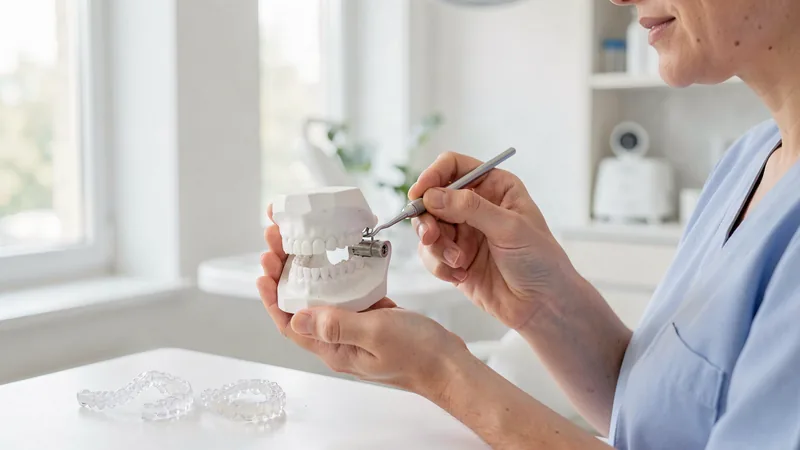



Sources
Tools & calculators

All 20 free Orthodontics tools
Cost calculators, comparisons and checklists. No sign-up.

Cost calculator
Estimate the range for a case in about a minute.

Cost guide
Every published appliance range, in one page.

Consultation checklist
What to bring and what to ask before you commit.

Knowledge quiz
Ten questions on costs, timing and coverage.

Appliance fit quiz
Eight questions that point to an appliance path.
Cost & Payment tools
Estimator, coverage checker, financing, payment plans, retainer cost, value over time

Compare & Plan tools
Appliance selector, braces vs aligners, timeline, treatment and school-calendar planners
Checklists & Answers tools
Practice questions, records and X-ray checklist, second opinion, smile check