An overbite is how far the upper front teeth overlap the lower ones when the back teeth are together. An underbite runs the other way, with the lower front teeth sitting in front of the upper ones. Both are jaw relationships rather than a single crooked tooth, which is why they behave differently from crowding and why the age of the patient changes the plan so much. This page explains each bite in plain English, what a deep bite or an underbite does over time, why a growing jaw opens options that an adult plan does not have, what an orthodontist assesses, and where the treatment cost lands. We are a free independent matching service: licensed Arlington orthodontists assess, quote and treat.
Overbite, underbite and crossbite, in plain English
An overbite is how far the upper front teeth overlap the lower ones when the back teeth are together. A small overlap is normal and healthy. A deep bite is when the lower front teeth are covered too far, sometimes to the point where they press into the gum behind the upper teeth.
An underbite runs the other direction. The lower front teeth sit in front of the upper ones, usually because the lower jaw is forward, the upper jaw sits behind, or both. A crossbite is a similar mismatch on one side, where the upper teeth bite inside the lower ones instead of outside them.
The key point is that these are relationships between the jaws rather than one tooth out of line. That is why the orthodontist looks at how the back teeth meet as well as the front, and why a bite correction and a crowding correction are priced and timed differently.
What a deep bite or an underbite does over time
The damage from these bites is slow and cumulative rather than sudden.
- Wear. Front teeth that meet edge to edge or overlap too deeply grind against each other with every bite, and enamel does not grow back.
- Gum irritation. In a deep bite the lower front teeth can strike the gum behind the upper teeth, which is uncomfortable and can leave a lasting mark.
- Jaw strain. A bite that forces the jaw into an awkward position can tire the jaw muscles, and in some patients it contributes to joint symptoms.
- Chewing and speech. A significant underbite can make biting through food awkward and can affect certain sounds.
- Appearance. An underbite changes the profile of the lower face, which is often the first thing a parent or patient notices.
None of that happens overnight. It is the argument for assessing a bite rather than waiting for a symptom, particularly where a jaw relationship rather than the teeth is the cause.
Why timing changes everything in a growing jaw
An underbite in a child is the clearest example of timing mattering. While the jaws are still growing, an orthodontist can guide that growth, using appliances that encourage the upper jaw forward or hold the lower jaw back. Once growth finishes, that door closes, and the same bite becomes a different problem.
An adult underbite is therefore treated differently. If the mismatch is mainly in the teeth, braces or aligners can often correct it. If the jaw relationship itself is significant, the honest answer may be that orthodontics alone cannot fix it and a surgical component joins the plan. That conversation belongs at a consultation, not in a website comparison.
A deep bite behaves differently again. It can be treated at almost any age, because the correction is mostly about moving teeth rather than guiding growth. Even so, treating it while a child still has growing years can be simpler, and school-year scheduling is a practical consideration across Arlington County.
What an orthodontist assesses at the consultation
The consultation starts with records: photographs, X-rays and a scan or impression of the teeth and bite. For a bite problem the orthodontist then reads those records for specific things.
- Whether the problem sits in the teeth or in the jaw relationship, because that decides whether growth guidance or surgery is even relevant.
- How much growth remains, which is the single biggest factor in a child's plan.
- How the back teeth meet, since a bite that is off at the front is usually off at the sides too.
- Whether the lower jaw can be guided into a better position, which some appliances test before treatment is committed to.
- Gum health, tooth wear and the condition of the front teeth, all of which shape what is realistic.
Cost and retention belong in the same appointment. Ask for the total fee in writing, what it includes, how the payment plan works, whether the practice files the insurance claim, and whether retainers are inside the total.
Treatment options at family level
What is offered depends on whether the jaw or only the teeth are involved, and on how old the patient is.
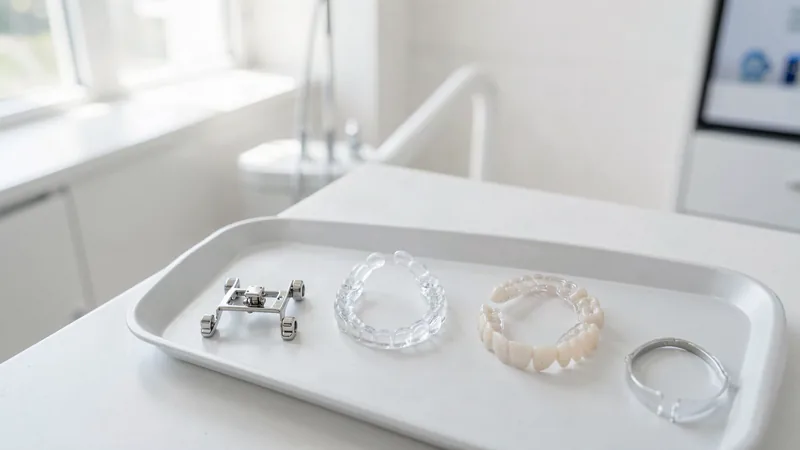
- Fixed braces. The most reliable tool for a large bite correction, and elastics between the upper and lower arches are often part of it.
- Clear aligners. Can handle mild to moderate bite corrections and suit adults and older teenagers who want a discreet option. A significant jaw relationship is usually not an aligner case.
- Growth appliances. In a child, a palatal expander or a functional appliance may be used to guide the jaws while they are still developing.
- Surgical orthodontics. For an adult whose jaw relationship is the cause, the plan may combine braces with jaw surgery. That is a major decision, and it is made with a surgical team rather than by an orthodontist alone.
- Observation. Sometimes the answer is to wait and review, particularly in a young child whose bite may improve as the teeth arrive.
Whatever route is chosen, the phase after treatment matters as much as the treatment. Retention follows a bite correction the same way it follows any orthodontic case, usually with a fixed wire behind the front teeth, a removable retainer, or both.
What a bite correction costs
Bite corrections are treated with the standard appliances, so the published bands are the ones that apply.
| Appliance | Published range | Insurance share where covered |
|---|---|---|
| Metal (standard) braces | $3,000 - $7,500 | $1,500 - $3,750 |
| Ceramic braces | $2,000 - $8,500 | $1,000 - $4,750 |
| Clear aligners (Invisalign) | $3,000 - $7,000 | $1,500 - $3,500 |
| Lingual braces | $5,000 - $13,000 | $3,500 - $9,250 |
| Comprehensive orthodontic treatment | $3,000 to more than $10,000 | A second published source puts the overall range at $3,000 to more than $12,000 |
| Braces paid privately | up to about $7,000 | Published ceiling for braces without insurance |
One case sits outside that table rather than inside it. Where the jaw relationship itself has to be corrected surgically in an adult, the surgical fee is a separate charge from the orthodontic fee, so both figures have to be requested from the practice and the surgical team.
No published source carries an average orthodontic fee for Arlington specifically, and this page does not state one. What moves the number inside those bands is the case rather than the town: a short round on a mild problem and a two-year plan with an extraction or a surgical step are not the same purchase. Ask each practice for a written fee schedule that lists what the total covers, records, appliances, every adjustment visit, removal, and retainers. If a retainer is not inside the total, ask for its price separately, because our sources publish no retainer price at all.
Frequently asked questions
Can an underbite be corrected without surgery?
In a growing child, often yes, because the orthodontist can guide the jaws while they are still developing. In an adult, if the mismatch is mainly in the teeth, braces or clear aligners may correct it. Where the jaw relationship itself is significant, surgery may be part of the plan. The orthodontist decides after records.
Is a deep bite a problem if it does not hurt?
Wear and gum irritation accumulate without pain, so a comfortable deep bite can still be worth assessing. The signs to look for are front teeth that have worn, a lower front tooth pressing into the gum behind the upper teeth, or jaw tiredness. Records and an examination confirm what is actually happening.
At what age should a bite problem be checked?
An early orthodontic evaluation around age seven is the common guidance, when the first permanent molars and front teeth have come through and a growing jaw can still be guided. A crossbite, an underbite that is developing, or a habit moving the front teeth are all reasons to book sooner rather than later.
How much does overbite or underbite treatment cost in Arlington?
Published ranges put metal braces at $3,000 to $7,500, ceramic braces at $2,000 to $8,500, clear aligners at $3,000 to $7,000 and lingual braces at $5,000 to $13,000. Comprehensive treatment runs $3,000 to more than $10,000, with a second published source at $3,000 to more than $12,000. Where a plan covers orthodontics, the published insurance share is roughly half. A surgical case carries a separate surgical fee.
Will I need a retainer after a bite correction?
Yes. Retention follows a bite correction the same way it follows any orthodontic case, usually with a fixed wire behind the front teeth, a removable retainer, or both, on a schedule the treating orthodontist sets. Our sources publish no retainer price, so ask whether the first set is included in the quoted fee and what a replacement costs.
Related



Sources
Tools & calculators

All 20 free Orthodontics tools
Cost calculators, comparisons and checklists. No sign-up.

Cost calculator
Estimate the range for a case in about a minute.

Cost guide
Every published appliance range, in one page.

Consultation checklist
What to bring and what to ask before you commit.

Knowledge quiz
Ten questions on costs, timing and coverage.

Appliance fit quiz
Eight questions that point to an appliance path.
Cost & Payment tools
Estimator, coverage checker, financing, payment plans, retainer cost, value over time
Compare & Plan tools
Appliance selector, braces vs aligners, timeline, treatment and school-calendar planners
Checklists & Answers tools
Practice questions, records and X-ray checklist, second opinion, smile check