Phase 1, sometimes called interceptive or early treatment, is a first round of treatment while some primary teeth are still in place. It is aimed at problems that are simpler to guide while a child is growing: a crossbite, a narrow upper arch, crowding that is blocking a permanent tooth, or a habit that is moving the front teeth. The second phase, if it is needed, follows once the adult teeth have come through and is the more familiar full course of braces or aligners. Most guidance points to a first evaluation around age seven to work out which children those are. Arlington is a county of about 243,931 residents, and Arlington Public Schools opened the 2026-27 year with 27,173 students, so the school calendar shapes when families can book. This page covers what Phase 1 does, the timing, what happens at the consultation and how the fee is quoted. We are an independent matching service, not a practice: we match you with licensed orthodontists, and they assess, quote and treat.
What it costs in Bailey's Crossroads
| Job | Published 2026 range |
|---|---|
| Invisalign published case example | $7,000 fee, $5,600 covered, $1,400 balance |
| That example paid over 24 months | about $58/month |
| Braces without insurance, published ceiling | up to about $7,000 |
| Published overall range (second source) | $3,000 - more than $12,000 |
What Phase 1 treatment is, and what it targets
Phase 1 treatment is a first phase of orthodontics that starts while primary teeth are still present. It is aimed at a specific problem: a crossbite, a narrow upper arch, crowding that is blocking a permanent tooth, a deep bite, or a thumb or finger habit that is moving the front teeth. The goal is to guide growth and remove an obstacle, not to finish the case.
The distinction matters for money and for expectations. A child who has Phase 1 may still need a second phase later, and a child who is watched instead of treated may need nothing at all, or may need a single full course later. Two practices can look at the same child and recommend different plans, and both can be honest.
Most guidance points to a first orthodontic evaluation around age seven, when the first permanent molars and front teeth have come through. That appointment is an assessment, and for many children the recommendation is simply to review again in six to twelve months.
What Phase 1 costs in Arlington
No published source carries a Phase 1 fee, so this page does not state one. Phase 1 is quoted by the orthodontist who plans it, and the number depends on what is being corrected and how many appliances it involves. Ask for the fee in writing, and ask whether it covers the whole phase or only part of it.
The wider plan has published ranges. Comprehensive orthodontic treatment runs $3,000 to more than $10,000, and a second published source puts the overall range at $3,000 to more than $12,000. If a full second phase follows, that is standard treatment: metal braces are published at $3,000 to $7,500 and clear aligners at $3,000 to $7,000. Where a dental plan covers orthodontics, the published insurance shares are about half the fee band.
| Item | Published figure | Notes |
|---|---|---|
| Phase 1 fee | Not published | Quoted by the treating orthodontist |
| Comprehensive orthodontic treatment | $3,000 - more than $10,000 | Second published source: $3,000 to more than $12,000 |
| Metal braces, full treatment | $3,000 - $7,500 | Insurance share reported at $1,500 - $3,750 |
| Clear aligners (Invisalign) | $3,000 - $7,000 | Insurance share reported at $1,500 - $3,500 |
One question matters more here than anywhere else: does your plan treat Phase 1 and Phase 2 as one orthodontic benefit, or as two? Many plans carry a single lifetime orthodontic maximum, so a first phase can use up the benefit a second phase would need. Ask the practice to check that before you commit, and ask whether waiting changes the picture. Our cost guide sets out the published ranges in full, and the free matching form puts your request in front of licensed Arlington orthodontists who quote in writing.
What happens at the consultation
The consultation is a records and planning visit run by the orthodontist: photographs, X-rays and a scan or impression, plus an assessment of the jaw relationship and how much growth is left. That last part is what decides whether treatment should start now or be reviewed later.
The recommendation usually falls into one of three answers: start Phase 1 now, review again in six to twelve months, or plan a first phase now with a second phase later. A parent should leave knowing which one applies and why, not just that treatment is recommended.
Money and the calendar belong in the same appointment. Ask for the total fee in writing, whether retainers are included at the end of the phase, how the practice files insurance claims, and how the first phase fits around the school term.
- Which recommendation applies, and what would change it
- What the Phase 1 fee covers, and what the second phase would cost
- Whether retainers are included when the phase ends
- Whether the plan treats Phase 1 and Phase 2 as one benefit
- How early-morning or after-school appointments work
Local note for Bailey's Crossroads
Columbia Pike is the corridor families use here, with I-395 and US-50 close by for the rest of the county. Ask which office will see the case and how many visits the treatment needs. Living on a county line usually means the nearest office is only minutes away, whichever county the paperwork names.
Bailey's Crossroads is in Fairfax County and supplied by Fairfax Water, so the Arlington County report does not describe the tap here. The county line runs close by, which is why one street can sit on a different water system, a different school division and a different locality from the next. Confirm the utility for the address rather than assuming it from the neighbourhood name.
Utility accounts: Fairfax Water (Fairfax County system)
Checking a quote in Bailey's Crossroads
What is the total fee, and what does it include (records, adjustments, retainers, removal)?
Is a retainer included in that fee, and what does a replacement cost?
How is the treatment time estimated for this case, and how often are visits?
What does my dental plan pay, and does it reset on a calendar year?
Frequently asked questions
What is Phase 1 orthodontics?
Phase 1, or early treatment, is a first round of orthodontics while some primary teeth are still in place. It targets problems that are easier to guide while a child is growing, such as a crossbite, a narrow upper arch or crowding that is blocking a permanent tooth. It is not the same as full treatment, and some children who have Phase 1 also need a second phase later.
How much does Phase 1 cost in Arlington?
No published source carries a Phase 1 fee, so this page does not state one. The fee is quoted by the treating orthodontist. If a full second phase follows, that falls in the published ranges: metal braces at $3,000 to $7,500, clear aligners at $3,000 to $7,000, and comprehensive treatment at $3,000 to more than $10,000, or $3,000 to more than $12,000 in a second published source.
At what age does early treatment start?
Most guidance points to a first orthodontic evaluation around age seven, when the first permanent molars and front teeth have come through. That visit is an assessment, not a commitment, and many children are reviewed again in six to twelve months rather than starting treatment straight away.
Related pages




Tools & calculators

All 20 free Orthodontics tools
Cost calculators, comparisons and checklists. No sign-up.

Cost calculator
Estimate the range for a case in about a minute.

Cost guide
Every published appliance range, in one page.

Consultation checklist
What to bring and what to ask before you commit.

Knowledge quiz
Ten questions on costs, timing and coverage.

Appliance fit quiz
Eight questions that point to an appliance path.
Cost & Payment tools
Estimator, coverage checker, financing, payment plans, retainer cost, value over time
Compare & Plan tools
Appliance selector, braces vs aligners, timeline, treatment and school-calendar planners
Checklists & Answers tools
Practice questions, records and X-ray checklist, second opinion, smile check
Resources

Blogs
Cost, timing and buying guides for Arlington families.
Problems
The bite and smile issues families ask about most.
Watch
Video walkthroughs and what to expect.

FAQ
The questions we get asked most.

How it works
The request, the match, the quotes.

About
Who this free matching service is for in Arlington.
Orthodontics in Bailey's Crossroads, VA
Bailey's Crossroads families looking for orthodontics can send one free request and be matched with local orthodontists who quote and carry the work. Treatment is planned by the licensed orthodontist after an assessment of the bite and the teeth; our matching service simply puts you in touch. Written itemised quotes make it easier to compare practices on the same scope before deciding.
Interceptive and Phase 1 Orthodontic Treatment
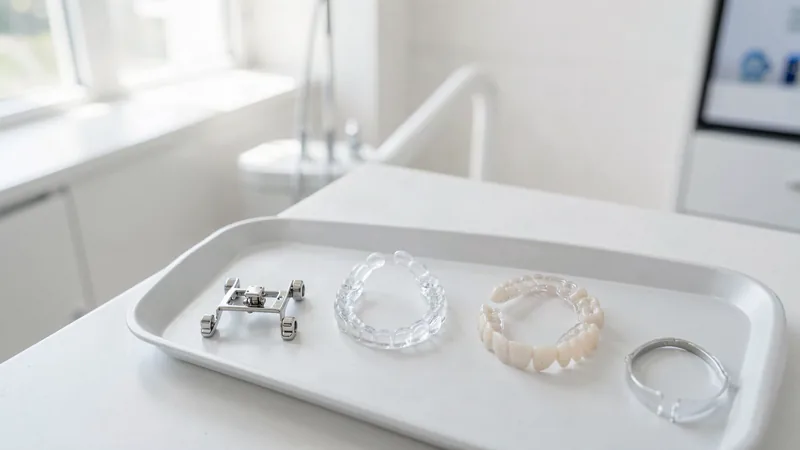
Interceptive or Phase 1 treatment is early orthodontic care aimed at guiding jaw growth and crowding while a child still has some baby teeth. It is not the same as a full course of braces later, and whether it is appropriate depends on the individual assessment. A local orthodontist explains what Phase 1 targets and what would follow. We match you with local orthodontists who assess and quote in writing.
Clear Braces and Treatment Options in Bailey's Crossroads
Orthodontic treatment options range from fixed braces to clear aligners, and the right one depends on the case rather than on preference alone. A local orthodontist explains what each option can and cannot correct, and what the treatment would involve. The quote should itemise the appliance and the visits included. We match you with local orthodontists who quote and carry the work.
How to Compare Orthodontic Quotes in Bailey's Crossroads
Comparing orthodontic quotes is easier when each one covers the same case scope. Ask for the records, the appliance, the estimated treatment length and the retention plan to be itemised, and confirm the practice's licence and insurance. That makes the bids like for like. Our matching request is free and carries no obligation to hire.