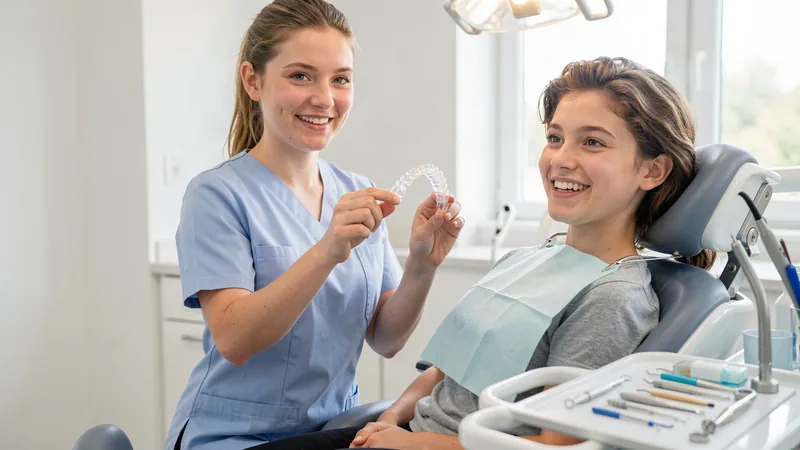
Relapse means the teeth have moved after orthodontic treatment finished. It is not a failure of the braces and it is not unusual: the fibers and bone around each tooth settle over months, a teenager's jaw keeps growing, and the tongue, lips and chewing push on the teeth for life. Most relapse traces back to a retainer, and the failures are ordinary rather than dramatic. This page covers why teeth shift, the ways a retainer stops doing its job, what an orthodontist assesses when movement has happened, the retreatment options, and where the cost lands. We are a free independent matching service, not a practice: licensed Arlington orthodontists assess, quote and treat.
What relapse is
Relapse means movement after treatment ended. The bone and the fibers that hold each tooth take months to settle once the appliance comes off, and the pressures around the teeth never actually stop. A result is held by retention rather than finished by the braces.
Most relapse is small. A lower front tooth rotates slightly, or a narrow space opens where none existed. Sometimes it is obvious: an old gap returning, or a bite that no longer meets the way it did when the retainers were new.
In either case the useful questions are the same. How much movement has happened, is it still active or has it settled, and how far back can it be taken without a full round of treatment. Those are answered on records rather than by eye.
Why teeth shift after treatment
- The fibers around the tooth. The ligament that holds a tooth in its socket retains a memory of where it has been, and it pulls gently for months after active treatment ends.
- Growth. A teenager finishing treatment at fourteen still has years of jaw growth ahead, and the lower jaw can keep growing into the late teens. Teeth can be pushed out of line by growth rather than by the treatment.
- Everyday forces. Tongue position, swallowing, the lips and chewing all press on the teeth continuously.
- No retention, or retention that stopped. A retainer worn to a schedule holds the result. A retainer in a drawer does not.
- Adult changes. Teeth keep moving slowly with age, particularly where gum and bone support has been lost over the years.
That list explains why retention is described as permanent rather than as a phase with an end date. It also explains why a second round ends the same way the first one did, with retainers.
The ways retainers stop doing their job
Most relapse traces back to a retainer rather than to the original treatment, and the failures are ordinary.
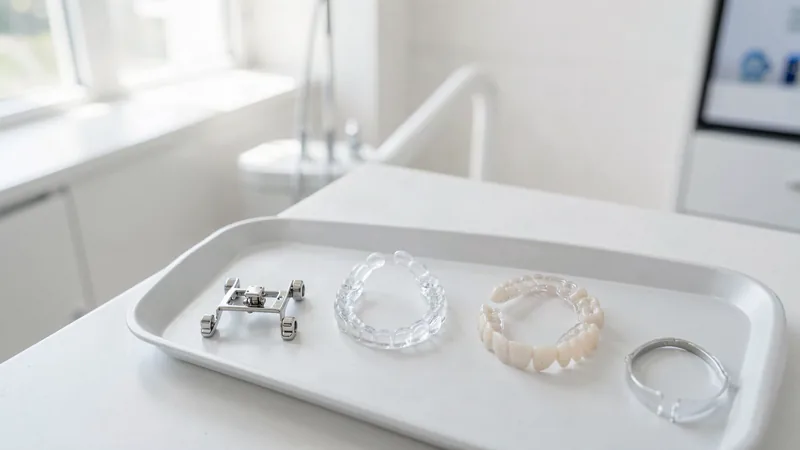
- Stopped wearing it. The most common cause by far. A removable retainer only does its job while it is in the mouth.
- Lost. Often on a trip, in a school bag, or in a napkin at a restaurant. Removable retainers come out of the mouth, so they get lost.
- Broken or worn out. A cracked or warped retainer no longer seats properly, and one that has stretched will not hold the teeth in position.
- A fixed wire that has come loose. A bonded wire behind the front teeth can debond at one end, and once it is loose it is not holding anything.
Every one of those has a remedy, and the remedy starts with a visit to the practice that made the retainer. Practitioners across Arlington see patients who moved into the county after treatment elsewhere, so it is worth knowing that a retainer does not have to be replaced by the practice that fitted it if the records can be shared.
What an orthodontist assesses when teeth have moved
A relapse assessment starts with records again: photographs, X-rays and a scan or impression, so the current position of the teeth can be compared with where the earlier treatment left them. The orthodontist then reads those records for a short list of things.
- How much movement has happened, and which teeth have moved.
- Whether the movement is still active or has settled into a stable position.
- Whether a retainer can still be made to fit, which is only realistic while the change is small.
- The condition of the gum and the bone, especially if a fixed wire has been in place for years.
- Whether the original cause is still present, because straightening the teeth again without addressing it invites a second relapse.
Cost belongs in the same conversation. Ask for the fee in writing, ask what it includes and ask what the retention plan looks like at the end of the new round.
Options, including the honest small-change answer
What is offered depends on how far the teeth have moved.
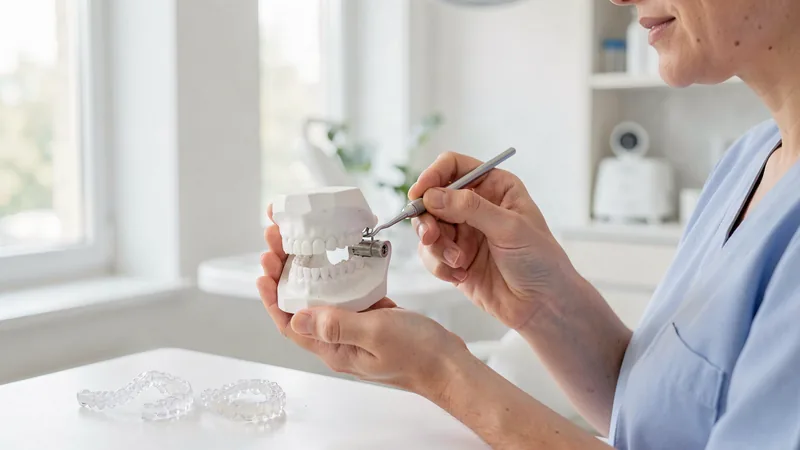
- A new retainer. If the drift is minor, the teeth may be repositioned into a new retainer made from a fresh scan or impression. That is a much smaller job than treatment, and it only works while the movement is small.
- A short aligner or braces round. The usual route for visible relapse, and often much shorter than the original treatment because most of the alignment is still there.
- Full retreatment. Needed when the bite has changed or several teeth have moved. The plan is written fresh from records, rather than reused.
- Retention for the long term. Whatever the route, the second round ends with the same phase as the first. The wear schedule comes from the treating orthodontist.
One honest note about the arithmetic. A second round is usually shorter, but it is not free, and our sources publish no retainer price at all. Both figures have to come from the practice, in writing, before the work starts.
What relapse treatment costs, and how it is covered
The published appliance bands are the same as they were the first time.
| Appliance | Published range | Insurance share where covered |
|---|---|---|
| Metal (standard) braces | $3,000 - $7,500 | $1,500 - $3,750 |
| Ceramic braces | $2,000 - $8,500 | $1,000 - $4,750 |
| Clear aligners (Invisalign) | $3,000 - $7,000 | $1,500 - $3,500 |
| Lingual braces | $5,000 - $13,000 | $3,500 - $9,250 |
| Comprehensive orthodontic treatment | $3,000 to more than $10,000 | A second published source puts the overall range at $3,000 to more than $12,000 |
| Braces paid privately | up to about $7,000 | Published ceiling for braces without insurance |
A short relapse round is often quoted below the full band, because the starting point is already close to the finish. That is a practice decision rather than a published number, so ask for the fee in writing and ask what it covers: records, trays or brackets, every visit, and a new set of retainers at the end.
Insurance is the part that catches people out. Many plans carry a lifetime orthodontic maximum, so a second round may draw on a benefit that was already used. Healthline notes that most dental insurers will not cover adult orthodontics at all, and annual maximums usually reset on the calendar year, so where the new round starts changes what a plan pays.
Invisalign states that FSA and HSA funds and payment plans apply to aligner treatment, and its own published case example shows a $7,000 fee with $5,600 covered, a $1,400 remaining balance and about $58 per month over 24 months. That is what a spread balance looks like rather than a discount. The fee is paid to the practice, and matching through this service costs nothing.
Frequently asked questions
Why did my teeth shift after braces?
Teeth keep responding to the forces around them after treatment ends. The fibers holding each tooth settle over months, a teenager's jaw keeps growing, and the tongue, lips and chewing push constantly. Retention is what holds the result, and most relapse traces back to a retainer that stopped being worn or no longer fits.
I lost my retainer. What should I do?
Book a visit with the practice that made it. If the teeth have not moved much, a new retainer can be made from a fresh scan or impression. If they have moved, a short round of aligners or braces may be needed first. Waiting usually makes the movement harder to correct.
Can teeth be straightened again after relapse?
Yes. Most relapse is treated with a much shorter round than the original, because most of the alignment is still there and the starting point is close to the finish. Where the bite has changed or several teeth have moved, a full plan is written from new records instead.
How much does relapse treatment cost in Arlington?
Published ranges put metal braces at $3,000 to $7,500, ceramic braces at $2,000 to $8,500 and clear aligners at $3,000 to $7,000, with comprehensive treatment at $3,000 to more than $10,000 and a second source at $3,000 to more than $12,000. A short relapse round is often quoted below those bands, but that is a practice figure rather than a published one.
Will insurance pay for a second round of braces?
Not reliably. Many plans carry a lifetime orthodontic maximum, so a second round may draw on a benefit that was already used. Healthline notes that most dental insurers will not cover adult orthodontics. Have the practice check your plan and ask when the annual maximum resets before deciding when to start.
Do I have to wear a retainer forever?
In practice, yes. Retention is permanent for most patients, whether it takes the form of a fixed wire behind the front teeth, a removable retainer, or both. The wear schedule comes from the treating orthodontist, and follow-up visits check that the retainer still fits and the teeth have not drifted.
Related



Sources
Tools & calculators

All 20 free Orthodontics tools
Cost calculators, comparisons and checklists. No sign-up.

Cost calculator
Estimate the range for a case in about a minute.

Cost guide
Every published appliance range, in one page.

Consultation checklist
What to bring and what to ask before you commit.

Knowledge quiz
Ten questions on costs, timing and coverage.

Appliance fit quiz
Eight questions that point to an appliance path.
Cost & Payment tools
Estimator, coverage checker, financing, payment plans, retainer cost, value over time

Compare & Plan tools
Appliance selector, braces vs aligners, timeline, treatment and school-calendar planners
Checklists & Answers tools
Practice questions, records and X-ray checklist, second opinion, smile check